Friday, May 1, 2009

Miss Pettigrew Lives for a Day

Cast: Frances McDormand; Amy Adams, Tom Payne, Mark Strong, Lee Pace, Shirley Henderson; Director: Bharat Nalluri; Producers: Nellie Bellflower, Stephen Garrett; Screenwriters: David Maggi, Simon Beaufoy; Music: Paul Englishby; Editor: Barne Pilling; Genre: ; Cinematography: John de Borman ; Distributor: Viva Films; Location: London; Running Time: 90 min.;

Technical Assessment: 3
Moral Assessment: 3
CINEMA Rating: For viewers 14 and above

Miss Guinevere Pettigrew (Frances MsDomand) has just been fired from her 4th job as a governess and she finds herself jobless and desperate on a bench in a London train station because of her rigid moral views. The day progresses and she encounters one bad luck after another that she finally she decides to pose as the applicant sent by her previous employer to an American social climber Delysia Lafosse (Amy Adams). Unfortunately, the position as Delysia’s social secretary compromises her morals as the former uses her sexuality to attain success. Amidst the backdrop of the 2nd World War, Ms. Pettigrew and Delysia become friends as each opens a new world to the other.

Miss Pettigrew Lives For A Day is delightfully entertaining. Dormand and Adams deliver outstanding portrayals of an uptight and cloistered woman exposed for the first time to the world and a social climber with deep secrets. The comedy is powerful and leaves you thinking hard after the nervous laughter. The production design and music ingenuously delivers the feel and elements of circa pre-war era. Over-all, Nalluri succeeds in delivering an honest movie with a strong moral lesson without being preachy or corny.

The movie makes one very strong statement: morality cannot be compromised. We often hear people saying certain principles and ways are “already too old-fashioned” or are “no longer applicable in modern times”. And in order to have fun or be successful, certain lines are crossed without batting an eyelash. The movie proves otherwise. Although people need to adapt to ways of change and experience, the line of morality remains. While it is not prohibited to have fun and enjoy life, or to be assertive to achieve success, all must be done in a way that is proper, modest and good. At the end of the day, one finds true love and happiness when she remains true to herself and to what she believes in.

Parents should caution their very young children against watching because of some partial nudity and the tolerance of promiscuity and premarital sex.

Thursday, April 30, 2009

Fuschia

Cast: Gloria Romero, Robert Arrevalo, Eddie Garcia, Armida Siguion Reyna, Gina Alajar, Iza Calzado, Tony Mabesa; Director: Joel Lamangan; Producer: Antonio P. Tuviera; Screenwriters: Joel Lamangan, Ricky Lee; Music: Vanda Guzman; Editor: Marya Ignacio; Genre: Drama; Cinematography: Carlos Montano; Distributor: APT Production; Location: Philippines; Running Time: 95 min.;

Technical Assessment: 3.5
Moral Assessment: 2.5
CINEMA Rating: For viewers 14 and above


BRIEF FILM SYNOPSIS

An elderly woman causes a scandal in a small community when she takes in her terminally ill first husband while still living with her current partner. But even as gossip surrounds her, she begins to find the strength within herself to speak out against the town's corrupt mayor.


OUTSTANDING FEATURES OF THE FILM:

How a woman courageously handles marital infidelity of her spouse enables her to speak out the truth against injustice and corruption in local government.

Wednesday, April 29, 2009

Boses


Technical Assessment: 4
Moral Assessment: 4
CINEMA Rating: For viewers age 13 and below with parental guidance

Boses is a tale of compassion, strength of the human spirit and the redeeming power of music. It tells the story of Onyok, a 7-year-old victim of child abuse in the hands of his father. Rendered mute by a physical trauma that damaged his larynx, Onyok (Julian Duque), who lives with his father in a countryside village, is rescued by police and taken to a shelter for battered children owned and run by the kindly Amanda (Cherry Pie Picache). His speech disability aggravated by the psychological burden of being kept away from his cruel father makes Onyok despondent. One day, seeing the other children taunting a man who lives in a house near the shelter, Onyok becomes curious, especially as he later on hears violin music coming from the house. He soon discovers that the man is the violinist Ariel (Coke Bolipata), the brother of Amanda who has abandoned his career as a concert violinist in Manila to live as a recluse, apparently in grief and guilt over the death of his woman. Onyok’s fascination with violin music leads him to investigate around Ariel’s house when it is empty. Sensing the boy’s interest, Ariel in time subtly manages to encourage Onyok to try the violin, and soon discerns a prodigy in the timid boy. A friendship very gently blossoms between the recluse and the battered child, until the boy is ripe for a recital to be witnessed by his father.


Boses is more than just a movie; it is a film that communicates its message to the soul using the soul’s language: music. And not just “muzak” as often used by cinematic potboilers, but music issuing from the bowels of the violin in the fullness of its range—from playful to plaintive. Boses is a rarity in the Philippine cinema industry which tends to churn out movies catering to popular taste. It has an educational value in the sense that the violin—a prominent instrument of classical music with which only privileged Filipinos are familiar—becomes an indispensable part of the film. First, although the film is about child abuse, the protagonists happen to be violinists, thus, the ubiquitous presence of the violin in it. Second, the musical score cleverly utilizes violin music which complements and enhances the emotional facet of the film. Third, the two lead actors are real life violinists, therefore their performance is not faked, but rather a unique privilege for the viewer who enjoys a bonus concert along with the movie. Boses also brings to the fore the serene charm of the countryside as it uses open spaces—seashores and fields—as backdrop for the clandestine violin lessons between violin master and prodigy.


Considering that the majority of the cast are first-time cinematic actors, Boses comes across as a credible reflection of real life issues, such as child abuse, and to a lesser extent, man’s inability to cope with his own weaknesses—as exemplified by the alcoholic abusive father and the reclusive violinist. The abusive father takes out his frustrations on a helpless child; the reclusive violinist punishes himself by wallowing in sorrow and remorse. But the innate good in man is also highlighted in the character of Amanda who deals with her brother, the victim-children, and the violent father with great patience, empathy and compassion. Boses should be seen and enjoyed by as many people as possible, especially the young and those who have anything to do with the young, whether they are teachers, lawmakers, law enforcers, media people, guidance counselors, social workers, religious educators, or plain parents.

Thursday, April 23, 2009

The Haunting in Connecticut

Cast: Virginia Madsen, Kyle Gallner, Elias Koteas, Amanda Crew, Martin Donovan, Sophi Knight, Ty Wood, EriK J. Berg; Director: Peter Cornwell; Producers: Paul Brooks, Daniel Farrands, Wendy Rhoads, Andrew Trapan; Screenwriters: Adam Simon, Tim Metcalfe; Music: Robert J. Kral; Editor: Tom Elkins; Genre: Horror-Suspense; Cinematography: Adam Swica; Distributor: Lionsgate Films; Location: USA; Running Time: 105 min.;

Technical Assessment: 2.5
Moral Assessment: 2.5
CINEMA Rating: For viewers 14 and above

Sara Campbell (Virginia Madsen), a doting wife and mother with her husband Peter (Martin Donovan), a recovering alcoholic decide to buy an old and almost dilapidated house in Connecticut, despite its “past” to be nearer the hospital where their teenage son Matt (Kyle Gallner) is receiving an experimental treatment for cancer. As soon as they move in, Matt decides to use the basement as his bedroom and at once starts having creepy visions. The family dismisses these strange hallucinations as effects of his sickness and the treatment and decides to remain in the house. When Matt’s cousin Wendy (Amanda Crew) realizes that the visions the boy Matt has been seeing are the same ones in the old pictures she found, they decide to investigate further. Eventually they find out that the house had been a funeral parlor with people conducting séances and the participants dying except for the owner’s son Jonah (Erik J. Berg) who has mysteriously vanished. Matt realizes that the spirits of the dead people are still living and hunting the house and he must try to put them at peace.

One good thing about The Hunting In Connecticut is skillful sound engineering. The sound effects have been tediously and meticulously applied to create a convincing scary atmosphere. Other than this, the movie is cliché and flat. The performances are unrealistic and weak, the storyline develops predictably and the script follows an old and tired formula. The spiritual points of view become confusing with frequent references to the Bible and to God interspersed with occult beliefs. The strong Christian references in the movie are watered down by the equally strong pagan practices. Disturbingly, this has become the custom of some Catholics. Today, you will see people who combine their faith practices with pagan beliefs or compromise their Gospel values when convenient – for instance commitment to the spouse can be abandoned and justified one has fallen in love with someone else.

As in any horror movie, spirits are portrayed as violent and revengeful. The movie contains several gory scenes that may offend the sensitivities of most viewers. Parents need to guide their children when watching.

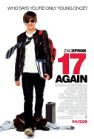
17 Again

Cast: Zac Efron, Lelie Mann, Thomas Lennon, Michelle Trachtenbeg, Sterling Knight, Matthew Perry, Melora Hardin, AllisonMiller; Director: Burr Steers; Producers: Jennifer Barrette, Adam Shankman; Screenwriter: Jason Filardi; Music: Rolfe Kent; Editor: Padraic McKinley; Genre: Romance/Comedy; Cinematography: Tim Suhrstedt; Distributor: New Line Cinema; Location: Los Angeles, California, USA; Running Time: 100 min.;

Technical Assessment: 3
Moral Assessment: 3
CINEMA Rating: For viewers age 13 and below with parental guidance

Mike O’Donnell (Matthew Perry) is experiencing what a lot of people call midlife crisis. His wife Scarlet (Leslie Mann) is suing for divorce, his children are aloof and indifferent to him and his most awaited promotion is given to someone else. Everything has gone awry since that memorable year in high school when he was 17, the year he was the idolized hero and golden boy of basketball with a promising future, what with all the scholarship offers to college. Now feeling at his lowest, Mike meets an old janitor who has not forgotten his exploits. Telling the janitor about his regrets over his mistakes, he wistfully wishes he were 17 again. Magically, Mike is plunged into a whirling vortex from which he emerges with his body at 17. Teenage Mike (Zac Efron) moves in with his best friend Ned (Thomas Lennon) who poses as Mike’s father when the transformed Mike enrolls at the high school. Though Mike inhabits his teenage body he has the same wife and children. He also retains the wisdom he has gained through his experiences. He helps his insecure son Alex (Sterling Knight) and his daughter Maggie (Michelle Trachtenberg) overcome their teenage problems and guides them so they do not commit the same mistakes he made. His wife thinks it weird that Mike looks like her husband when he was a teenager. She is attracted to him, though she thinks it’s wrong, she being the mother of Alex who considers the teenaged Mike his best friend. Mike is still very much in love with his wife but he can’t explain just yet why it’s not wrong for them to fall in love again. What’s in store for them?

Hitting the number one spot in the U.S. box office chart after its opening day take of $24.5 million, 17 Again, the latest Zac Efron movie is said to outdo at the tills all of his other successful movies, including the High School Musical. This, in spite of the fact that here, the heartthrob does not have his usual equally popular partner, Vanessa Hudgens to put across with sweet chemistry that enviable romance which makes the idealistic young and the not-so-young swoon with delight. In 17 Again, Zac has only a brief scene with a teenage sweetheart and in the rest of the film, is paired with a lead, old enough to be his mother. The photography and the movie are not much to rave about, yet the movie has somehow clicked. Could it be the plot then? A story about body switches is not new in the movies and it challenges our credubility. But if, when going to the movies, the moviegoer is ready for even some strange possibilities, then probably a light film like 17 Again can be pleasantly entertaining especially when it is a bit more surprising than others. It has its own kind of humor like the first dinner date between Mike’s best friend, the weird millionaire Ned and the frosty principal Jane Masterson (Melora Hardin) who can inspire true love in this man whose greatest happiness before meeting her was to flaunt Darth Vader’s light saber, Now older, with a new adult persona and sensibility, Zac Efron has retained his boyish charm and is the film’s main magnet. Outgrowing his juvenile performances, he exudes more confidence and does adequately in important scenes.

Unlike most teenage movies, 17 Again has a lot of values that can give moviegoers especially young ones, some food for thought. We have met some people like the middle-aged Mike O’Donnell. Someone who blames others for his failures. In the movie, Mike blames his wife Scarlet because he thinks the teenager pregnancy of Scarlet caused him to lose his equanimity, his games as a basketball star and eventually his college scholarship and promising future. Harping on that, he has been living in the gloried past and what would have been and not doing enough in the present to succeed. The result: failure in different aspects of his life including his failure as a husband and a father. But the good thing in the end is his realization that he wants to change if given another chance. Another positive value is the correct idea regarding sex, espoused by the “17-again” Mike. The health class teacher in the film wants to teach “safe sex” with the use of condoms, like many misguided teachers today. Mike contradicts this by advocating abstinence from sex until marriage. He is speaking from experienced. He does not want others to commit his mistakes. He is especially concerned about his own children. And he gives his daughter very good advice after he finds her weeping because she is “dumped” by her boyfriend for not consenting to have sex with him. Mike tells her she will come across many such men who are undeserving of her but eventually she will meet someone who will appreciate her for her true worth as a person and not as a sex object. There is, however, something dismaying in the way the teenaged girls are portrayed. All of them appear wild, sex-crazed and sex-starved. Even Mike’s daughter seduces him, though unsuccessfully. Three teenaged girls proposition him angling for sex, saying he does not have to remember their names. Is this a true picture of teenaged girls in high school? We hope not. This is an American film. Good forbid that our local teenagers will imitate unthinkingly what they see on the screen.